



Oil Well Drilling Equipment
Oil Well Drilling Equipment for Safe and Efficient Drilling Operations
Oil well drilling is the first major step in developing an oil or gas reservoir. The process requires reliable equipment, accurate planning and strong pressure control. From the surface rig to the downhole drilling tools, every component must work under demanding field conditions.
For operators, drilling contractors and oilfield service companies, equipment quality has a direct impact on drilling efficiency, well safety and long-term production performance.
What Is Oil Well Drilling?
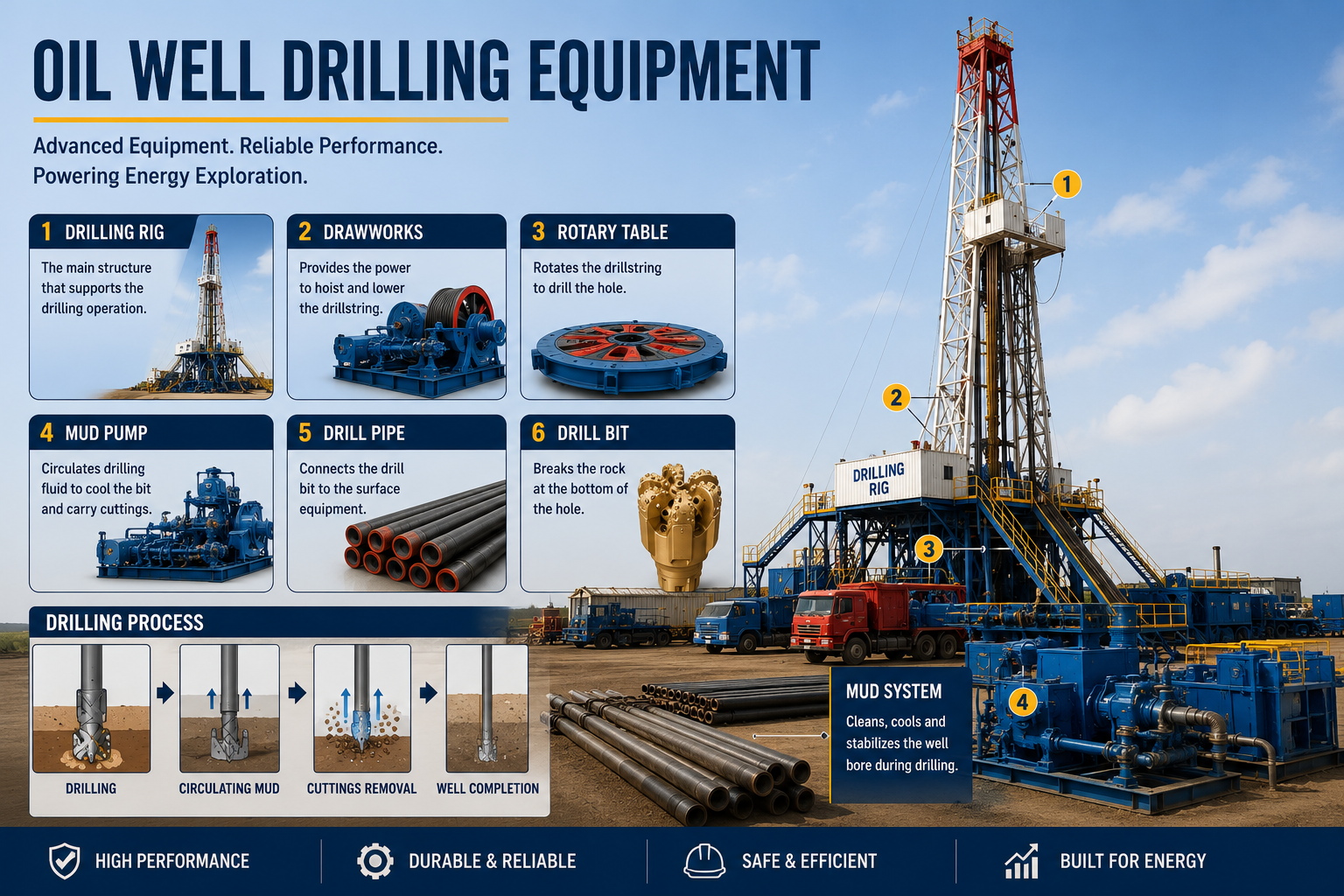
Oil well drilling is the process of creating a wellbore from the surface to the target reservoir. The drilling operation uses a rotating drill bit, drill pipe, drilling fluid and pressure control equipment to reach the required depth.
A typical oil well drilling process includes:
- Well site preparation
- Rig-up and equipment inspection
- Spudding the well
- Drilling the surface hole
- Running casing
- Cementing
- Drilling deeper sections
- Pressure control
- Well completion preparation
Different wells require different drilling plans. Vertical wells, directional wells and horizontal wells all have different equipment and control requirements.
Main Equipment Used in Oil Well Drilling
Oil well drilling depends on several groups of equipment. The most common equipment includes:
- Drill pipe
- Drill collar
- Heavy weight drill pipe
- Casing and tubing
- Blowout preventer
- Wellhead equipment
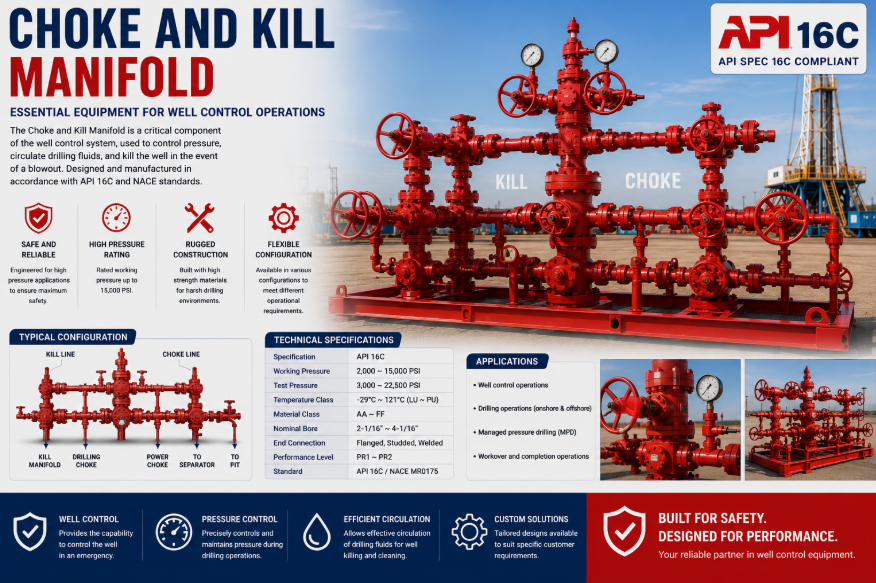
- Choke and kill manifold
- Mud pump and mud system
- Drilling hose
- Cementing tools
- Downhole drilling tools
- Flowline and pressure control products
Each product should be selected according to well depth, pressure, temperature, formation condition and drilling program.
Drill Pipe and Drill Collar
Drill pipe transfers torque and drilling fluid from the rig to the drill bit. It must handle tension, torque, internal pressure and repeated connection cycles.
Buyers should confirm:
- Size and length
- Steel grade
- Connection type
- Wall thickness
- Internal coating, if required
- Inspection standard
- Quantity and delivery time
Drill collars are heavier and provide weight on bit. They help stabilize the drilling assembly and improve drilling performance.
Casing and Tubing
Casing is used to support the wellbore and isolate different formations. Tubing is used later for production or well service operations.
Important details include:
- Outer diameter
- Wall thickness
- Steel grade
- Thread type
- Collapse resistance
- Burst resistance
- Tensile strength
- API requirement
For oil well drilling, casing quality is critical because it becomes part of the permanent well structure.
Blowout Preventer and Pressure Control
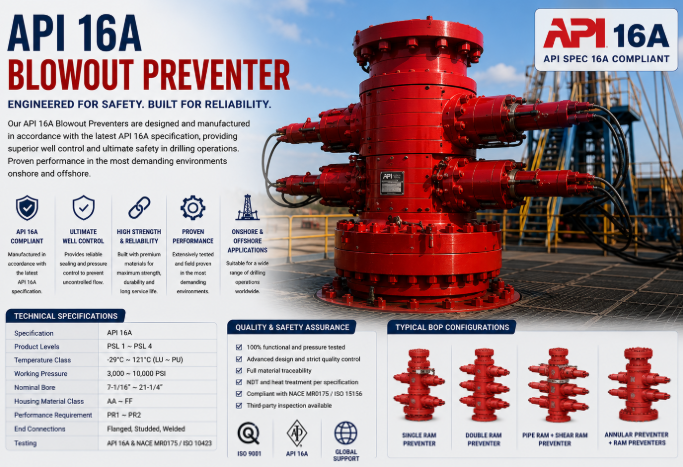
A blowout preventer, also called BOP, is one of the most important safety systems in oil well drilling. It is used to control unexpected pressure from the well.
Pressure control equipment may include:
- Annular BOP
- Ram BOP
- Choke manifold
- Kill manifold
- Control system
- Wellhead connection
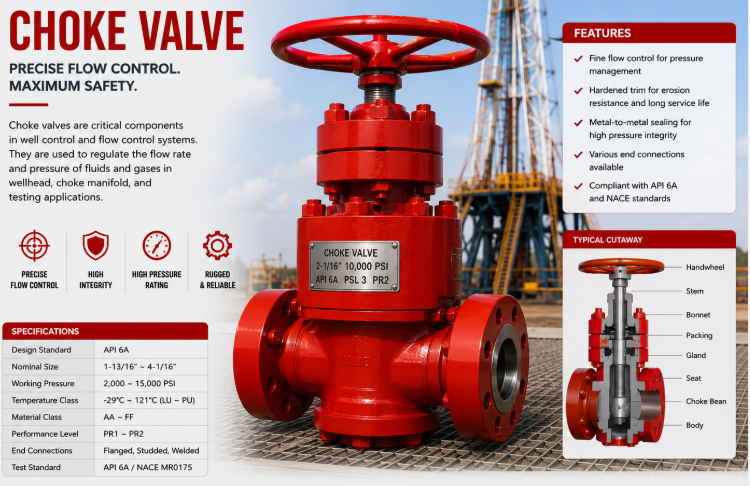
- High-pressure valves
Before drilling high-pressure wells, buyers should check pressure rating, bore size, sealing performance, test report and spare parts availability.
Wellhead Equipment for Drilling Operations
Wellhead equipment provides the connection between the surface system and the wellbore. It supports casing strings, seals pressure and connects pressure control equipment.
Common wellhead products include:
- Casing head
- Tubing head
- Christmas tree
- Wellhead spool
- Adapter flange
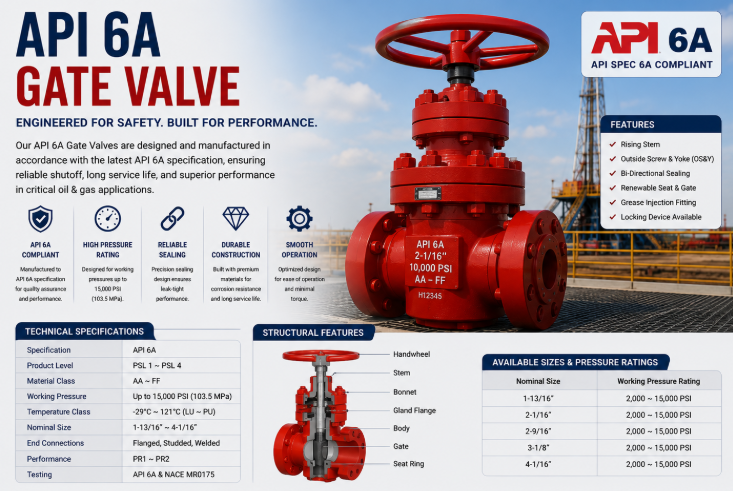
- Gate valve
- Studded cross
- Wellhead accessories
Wellhead equipment should match the casing program, pressure rating and connection standard of the project.
Choke and Kill Manifold
The choke and kill manifold is used to control well pressure during drilling and well control operations. It helps circulate drilling fluid, manage pressure and support safe well control.
Buyers should confirm:
- Working pressure
- Valve configuration
- Choke type
- Connection standard
- Skid layout
- Test certificate
- Packing and delivery requirements
For high-pressure wells, the manifold must be selected carefully to match the BOP and wellhead system.
How to Choose Oil Well Drilling Equipment
When sourcing oil well drilling equipment, buyers should not only compare price. The following points are more important:
- Pressure rating
- Material grade
- API standard requirement
- Connection compatibility
- Testing and inspection
- Spare parts support
- Delivery schedule
- Export packing
- Technical document support
A small mismatch in connection type, pressure rating or material grade can cause delays at the drilling site.
Information Needed for a Fast Quotation
To get an accurate quotation, prepare the following information:
- Product name
- Size
- Pressure rating
- Material grade
- Standard requirement
- Connection type
- Quantity
- Working condition
- Destination country
- Required delivery time
- Drawing or technical specification
If the full equipment list is not ready, you can send the drilling program or wellhead layout first. The supplier can help check suitable equipment options.
Kytider Oil Well Drilling Equipment
Kytider supplies oilfield equipment for drilling, wellhead control and high-pressure operations. Our product range includes drill pipe, casing, tubing, wellhead equipment, BOP spare parts, choke and kill manifolds, gate valves, flowline products and related oilfield spare parts.
We can support customized selection according to pressure rating, connection type, material requirement and project conditions.
If you are sourcing oil well drilling equipment for a new drilling project, replacement order or well service operation, send us your technical requirements. Our team can help check the suitable configuration and provide a quotation.
FAQ
What is oil well drilling?
Oil well drilling is the process of creating a wellbore to reach an oil or gas reservoir.
What equipment is used in oil well drilling?
Common equipment includes drill pipe, drill collar, casing, tubing, BOP, wellhead equipment, choke and kill manifold, drilling hose and pressure control products.
Why is pressure control important in drilling?
Pressure control helps prevent uncontrolled flow from the well and supports safe drilling operations.
What information is needed for a quotation?
Product name, size, pressure rating, material grade, connection type, quantity and destination country are usually required.
Can drilling equipment be customized?
Yes. Size, connection type, material grade and configuration can be selected according to the drilling program and working conditions.