




Hydraulic Fracturing Equipment
Hydraulic Fracturing Equipment: Key Components for High-Pressure Frac Operations
Hydraulic fracturing is widely used in oil and gas wells to improve reservoir production. During the operation, fluid is pumped into the well at high pressure to create fractures in the formation. Sand or other proppant keeps those fractures open, allowing oil or gas to flow back to the wellbore more efficiently.
For operators, service companies and equipment buyers, hydraulic fracturing is not only about pumping pressure. The reliability of the wellhead, frac tree, frac valves, manifold system, frac hose and flowline connections has a direct effect on safety, job efficiency and maintenance cost.
What Is Hydraulic Fracturing?
Hydraulic fracturing, also called fracking, is a well stimulation method used in shale gas, tight oil, coalbed methane and other low-permeability reservoirs. The process usually involves water, proppant and chemical additives. These materials are mixed and pumped into the well under controlled pressure.
A typical hydraulic fracturing job includes:
- Well preparation
- Pressure pumping
- Fluid and proppant delivery
- Wellhead pressure control
- Flowback control
- Post-job inspection
The working environment is harsh. Equipment must handle high pressure, abrasive sand, vibration, repeated opening and closing, and sometimes corrosive media.
Main Equipment Used in Hydraulic Fracturing
A complete hydraulic fracturing operation depends on several groups of equipment. Each part must match the pressure rating, connection type and working conditions of the job.
Frac Tree / Frac Stack
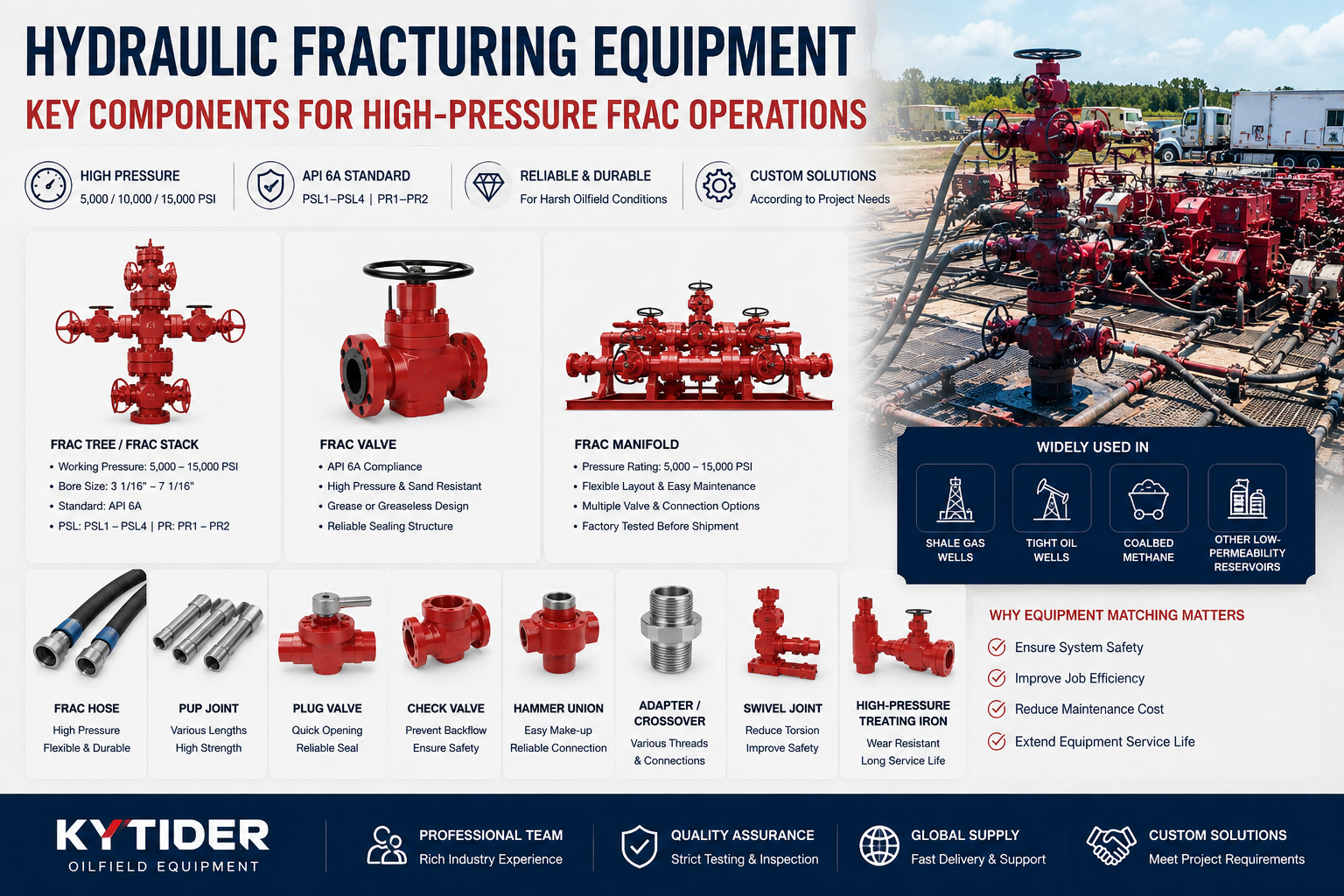
The frac tree, also known as a frac stack, is installed on the wellhead during fracturing. It controls high-pressure fluid entering the well and provides connection points for the manifold and flowline system.
Common specifications include:
- Working pressure: 5,000 psi, 10,000 psi, 15,000 psi
- Bore size: 3 1/16 inch, 5 1/8 inch, 7 1/16 inch
- Standard: API 6A
- Material grade: AA, BB, CC, DD, EE, FF, HH
- PSL level: PSL1 to PSL4
- PR level: PR1 or PR2
For high-pressure fracturing, buyers should confirm the bore size, outlet layout, valve configuration and connection standard before ordering.
Válvula de fraturamento
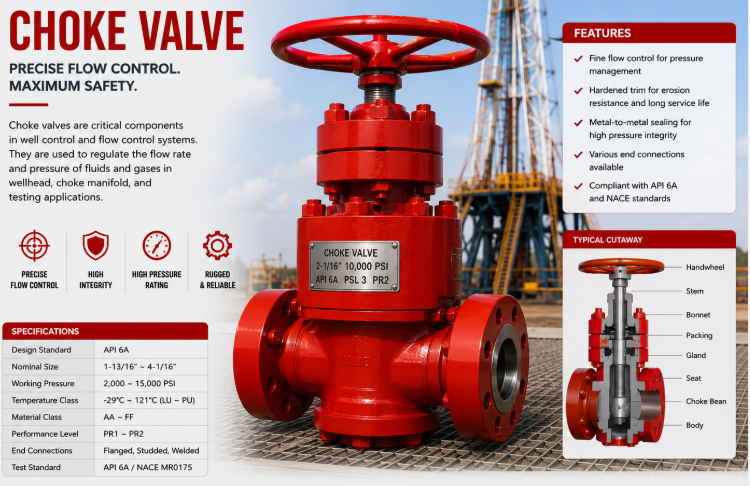
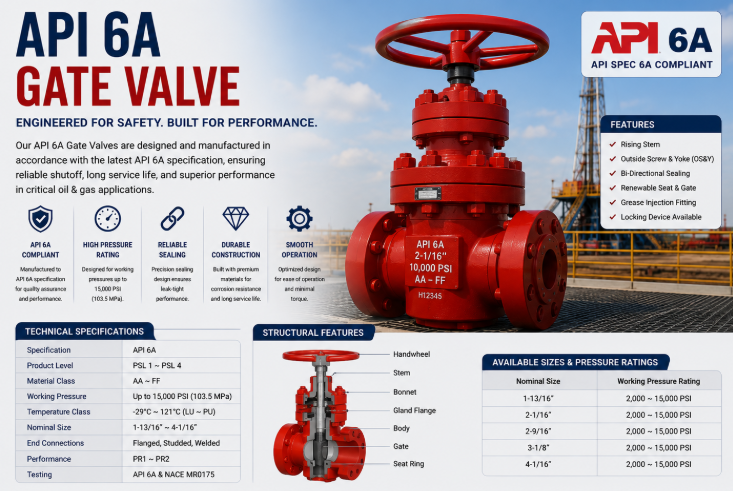
Frac valves are used to control high-pressure fracturing fluid. A reliable frac gate valve can reduce leakage, improve service life and lower maintenance frequency on site.
When selecting a frac valve, buyers should check:
- Pressure rating
- Body and gate material
- Sealing structure
- Sand resistance
- Grease or greaseless design
- API 6A compliance
- Repair and spare parts availability
A low-price valve may look attractive at the beginning, but valve failure during a frac job can cause much higher costs.
coletor de fraturamento
The frac manifold distributes high-pressure fluid from pumping units to one or more wells. It usually includes valves, blocks, tees, crosses, elbows and pressure control components.
A good frac manifold should be easy to connect, inspect and maintain. The layout should also match field space, pump quantity and wellhead position.
Important points include:
- Pressure rating
- Flow capacity
- Connection type
- Valve arrangement
- Skid design
- Testing before shipment
Frac Hose and High-Pressure Flowline
Frac hoses and high-pressure flowline products connect different parts of the fracturing system. They must handle pressure, movement, abrasive fluid and field installation conditions.
Common related products include:
- Frac hose
- Pup joint
- Hammer union
- Plug valve
- Check valve
- Adapter
- Crossover
- Swivel joint
- High-pressure treating iron
For long-term use, buyers should confirm working pressure, inner diameter, end connection, bend radius, temperature range and test certificate.
Why Equipment Matching Matters
Hydraulic fracturing equipment works as a system. If the frac tree is rated for 15,000 psi but the hose, manifold or connection is not suitable, the whole system becomes risky.
Before procurement, the equipment list should be checked together:
- Frac tree pressure rating
- Valve pressure rating
- Manifold layout
- Hose and flowline connection
- API standard requirement
- Material grade
- Quantity and spare parts
- Test report and documentation
Matching equipment from one supplier can reduce communication errors and make installation easier.
How to Choose a Hydraulic Fracturing Equipment Supplier
A qualified supplier should understand both product manufacturing and field operation requirements. Buyers should not only ask for price. The following details matter more:
- Can the supplier provide drawings before production?
- Can the equipment be customized according to wellhead layout?
- Is hydrostatic pressure testing available?
- Are material certificates and inspection reports available?
- Can spare parts be supplied later?
- Does the supplier understand API 6A and high-pressure oilfield service?
- Can the supplier support export packing and documentation?
These questions help filter suppliers quickly.
Information Needed for a Fast Quotation
To get an accurate quotation for hydraulic fracturing equipment, send the following information:
- Product name
- Working pressure
- Bore size
- Quantity
- API standard requirement
- Material grade
- Connection type
- Medium and working temperature
- Destination country
- Required delivery time
- Drawing or technical specification, if available
If the full configuration is not confirmed, you can send the wellhead layout or current equipment list. The supplier can help check the suitable frac tree, frac valve, manifold and flowline products.
Kytider Hydraulic Fracturing Equipment
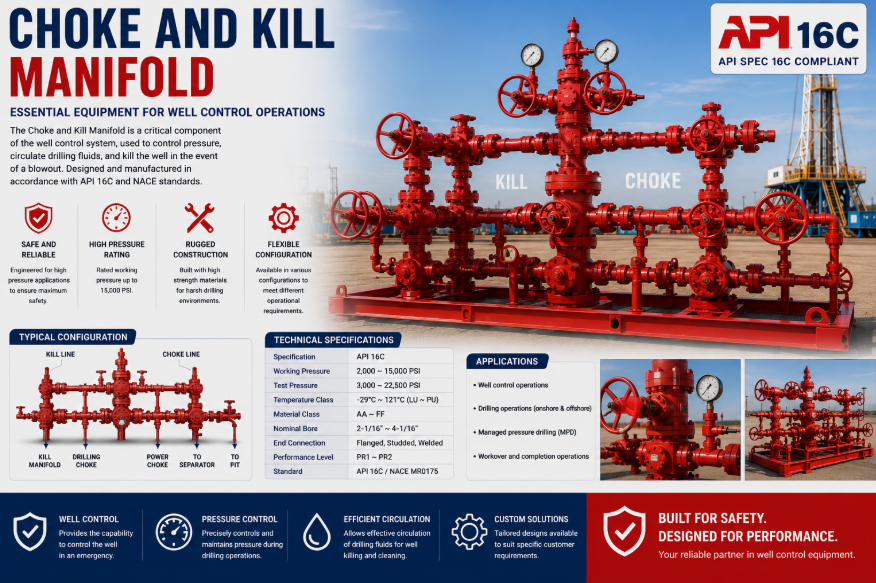
Kytider supplies oilfield wellhead and fracturing equipment for high-pressure applications, including frac trees, frac valves, frac manifolds, frac hoses, choke and kill manifolds, high-pressure flowline products and related spare parts.
For hydraulic fracturing projects, Kytider can support product selection, technical communication, customized configuration, inspection and export delivery.
If you are looking for hydraulic fracturing equipment for a new project or replacement parts for existing frac operations, send us your pressure rating, bore size, connection type and quantity. Our team will reply with a suitable solution.
FAQ
What equipment is used in hydraulic fracturing?
Common equipment includes frac tree, frac valve, frac manifold, frac hose, high-pressure flowline, plug valve, check valve, pup joint and hammer union.
What pressure rating is common for frac equipment?
5,000 psi, 10,000 psi and 15,000 psi are commonly used. The final rating depends on well conditions and project requirements.
What standard is used for frac tree and frac valve?
API 6A is commonly used for wellhead and tree equipment. Some flowline products may also involve API 16C requirements.
Can hydraulic fracturing equipment be customized?
Yes. Pressure rating, bore size, connection type, material grade and manifold layout can be customized according to the project.
How can I get a quotation?
Send product name, pressure rating, bore size, quantity, connection type and destination country. Drawings or technical specifications will help speed up the quotation.