




Equipamento de cabeça de poço
Wellhead Equipment for Oil and Gas Wells
Wellhead equipment is one of the most important pressure-control systems in an oil and gas well. From drilling and casing suspension to completion, fracturing and production, the wellhead provides the mechanical structure and sealing system needed to keep the well under control.
For oilfield operators, drilling contractors and equipment procurement teams, choosing the right wellhead equipment is not only a purchasing decision. It directly affects well safety, pressure integrity, installation efficiency and long-term field performance.
What Is Wellhead Equipment?
Wellhead equipment refers to the pressure-containing and pressure-controlling components installed at the surface of an oil or gas well. It connects the casing strings, tubing string, valves, flowline and production equipment.
A complete wellhead system may include:
- Casing head
- Casing spool
- Tubing head
- Tubing spool
- Christmas tree
- Frac tree
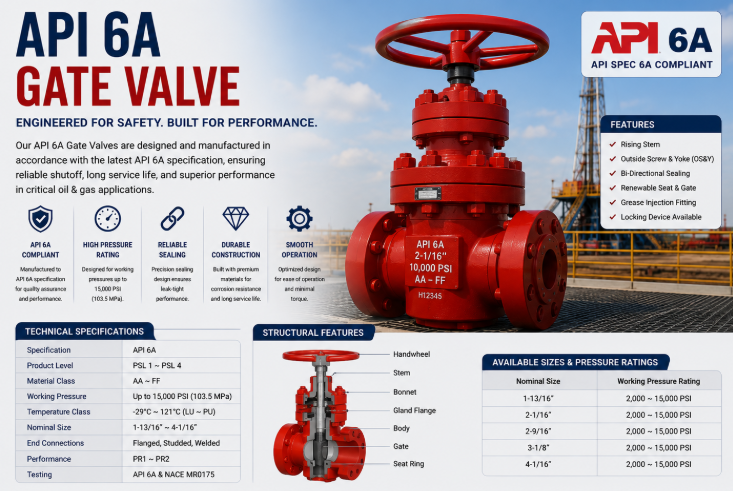
- Gate valve
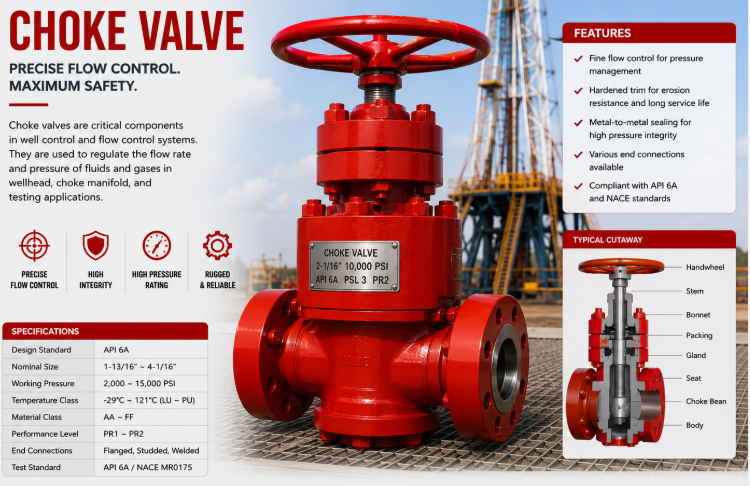
- Choke valve
- Check valve
- Adapter flange
- Wellhead flange
- Studded cross and tee
- Hangers and sealing assemblies
- High-pressure fittings and connection parts
The exact configuration depends on the well type, pressure rating, casing program, production plan and field service conditions.
Why Wellhead Equipment Matters
The wellhead is the first major pressure-control point at the surface. If the wellhead system is not properly selected or manufactured, it may cause leakage, installation problems, equipment mismatch or field downtime.
Reliable wellhead equipment helps operators:
- Support casing and tubing strings
- Seal annular pressure between casing layers
- Control well pressure during drilling and completion
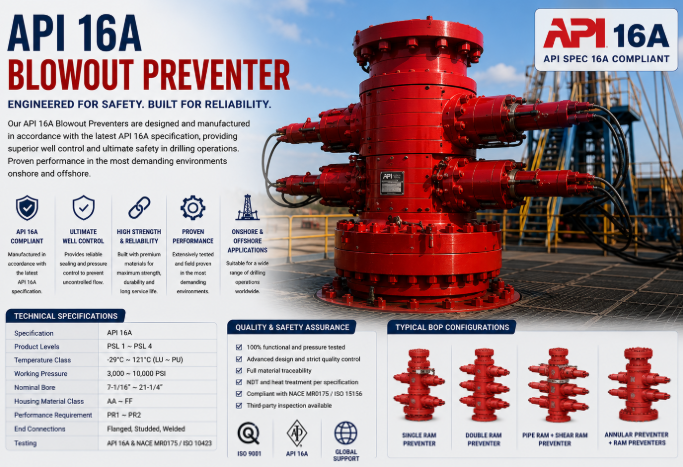
- Connect BOP, frac tree or Christmas tree equipment
- Provide safe access for production and intervention work
- Maintain pressure integrity throughout the well life cycle
In high-pressure wells, sour gas wells and fracturing wells, the quality of wellhead equipment becomes even more critical.
Main Types of Wellhead Equipment
Casing Head
The casing head is installed on the surface casing and provides support for the next casing string. It is one of the first key wellhead components installed during drilling.
A casing head is commonly used to:
- Suspend casing weight
- Seal the annular space
- Connect with BOP equipment
- Provide side outlets for pressure monitoring or fluid return
Casing Spool
A casing spool is used when multiple casing strings are required. It connects different casing layers and provides sealing and suspension functions.
Buyers usually need to confirm bore size, flange size, pressure rating, hanger type and outlet connection before ordering.
Tubing Head
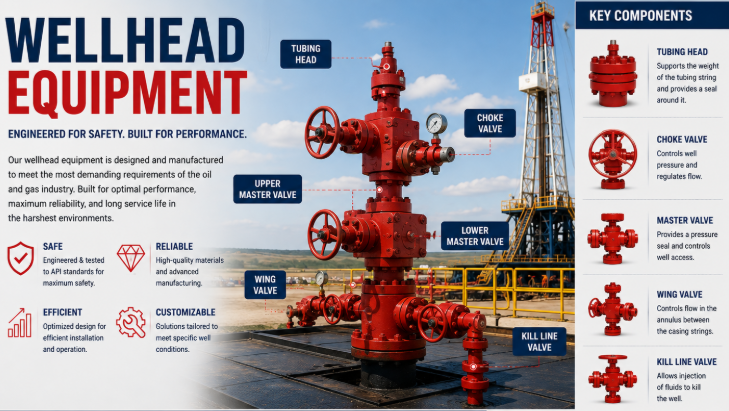
The tubing head supports the production tubing and provides a connection point between the casing spool and Christmas tree. It also helps seal the tubing-casing annulus.
Tubing heads are widely used in production wells, gas wells and workover applications.
Christmas Tree
A Christmas tree is installed on top of the wellhead after completion. It controls oil or gas production flow and provides access for pressure monitoring, injection, testing and intervention.
A Christmas tree may include master valves, wing valves, swab valve, choke valve and various flanged or studded connections.
Árvore de fraturamento
A frac tree is used during hydraulic fracturing operations. Compared with a standard production tree, a frac tree is built for high-pressure, high-flow and severe fracturing service.
Common pressure ratings include 10,000 psi and 15,000 psi, depending on project requirements.
Common Wellhead Equipment Specifications
When sourcing wellhead equipment, buyers should confirm the technical requirements clearly. Different wells require different configurations, and a small mismatch can lead to delays on site.
Important specifications include:
- Working pressure: 2,000 psi, 3,000 psi, 5,000 psi, 10,000 psi, 15,000 psi or higher
- Standard: API 6A
- Bore size: according to casing, tubing and well program
- Material class: AA, BB, CC, DD, EE, FF or HH
- PSL level: PSL1, PSL2, PSL3 or PSL4
- PR level: PR1 or PR2
- Temperature class: according to field environment
- Connection type: flanged, studded, threaded or customized
- Service condition: standard, H2S, CO2 or corrosive service
- Operation type: manual, hydraulic or actuator-operated valves
For high-pressure or sour service applications, material selection and sealing structure should be checked carefully before production.
API 6A Wellhead Equipment
API 6A is one of the key standards used for wellhead and Christmas tree equipment in the oil and gas industry. It covers design, material, performance, testing and quality requirements for pressure-containing wellhead equipment.
For international buyers, API 6A wellhead equipment is often required because it helps ensure:
- Standardized pressure ratings
- Consistent connection dimensions
- Traceable material requirements
- Controlled manufacturing process
- Pressure testing before shipment
- Better compatibility with other oilfield equipment
When sending an inquiry, buyers should clearly mention whether API 6A compliance, PSL level, PR level or special material requirements are needed.
How to Choose a Wellhead Equipment Supplier
A good wellhead equipment supplier should understand the full wellhead system, not only individual parts. Many procurement problems happen because different components are purchased separately without checking pressure rating, flange size, bore size or sealing requirements.
When choosing a supplier, consider:
- Experience with API 6A wellhead equipment
- Ability to supply complete wellhead assemblies
- Support for customized drawings and configurations
- Pressure testing and inspection capability
- Material traceability and documentation
- Export packing experience
- Fast technical communication
- Stable delivery time for project orders
For overseas buyers, communication speed is also important. Wellhead equipment often involves technical confirmation, and slow response can delay the full project schedule.
Information Needed for a Fast Quotation
To receive an accurate quotation, prepare the following details:
- Product name or wellhead assembly type
- Working pressure
- Bore size
- Casing or tubing size
- Connection type
- Material class
- PSL and PR requirement
- Service condition
- Quantity
- Drawing or technical specification
- Destination country
- Required delivery time
If the project requires a complete wellhead system, it is better to provide the well program or existing equipment drawing for compatibility checking.
Kytider Wellhead Equipment Supply
Kytider supplies wellhead equipment and related oilfield pressure-control products for drilling, completion, fracturing and production applications. Products can be selected according to pressure rating, bore size, material class, connection type and project requirements.
Kytider can support customers with casing heads, tubing heads, Christmas trees, frac trees, gate valves, flanges, spools, adapters and related high-pressure wellhead components.
If you are looking for reliable wellhead equipment for oil and gas projects, send your technical requirements to Kytider. Our team can help check the suitable configuration and provide a quotation based on your working pressure, connection standard and field application.
FAQ About Wellhead Equipment
What is wellhead equipment used for?
Wellhead equipment is used to support casing and tubing, seal well pressure, connect pressure-control equipment and control oil or gas flow at the surface.
What are the main components of wellhead equipment?
Common components include casing head, casing spool, tubing head, Christmas tree, frac tree, gate valve, flanges, adapters and sealing assemblies.
What standard is used for wellhead equipment?
API 6A is commonly used for wellhead and Christmas tree equipment in oil and gas applications.
What pressure ratings are available for wellhead equipment?
Common pressure ratings include 2,000 psi, 3,000 psi, 5,000 psi, 10,000 psi and 15,000 psi.
How do I choose the right wellhead equipment?
You need to confirm working pressure, bore size, casing size, material class, connection type, service condition and API 6A requirements before selecting the equipment.